
Noticing blood when you go to the toilet can be alarming, but rectal bleeding is more common than you might think. Research shows that around 1 in 5 adults report experiencing bleeding from the bottom at some point each year. Whilst the cause is often something minor like piles, rectal bleeding should never be ignored because it can sometimes indicate more serious conditions. At Abbey Wood Hospital’s London Urgent Care Centre, we help patients understand what is causing their symptoms and ensure they receive appropriate investigation and treatment without unnecessary delay.
In This Article
Understanding Rectal Bleeding
Rectal bleeding refers to any blood that passes from the back passage (anus). According to NHS guidance on bleeding from the bottom, this might appear as bright red blood on toilet paper, streaks on your stool, or blood in the toilet bowl. The colour and appearance of the blood can provide useful clues about where the bleeding is coming from.
Bright red blood usually indicates bleeding from the lower part of the digestive system, such as the rectum or anus. This is often caused by conditions like haemorrhoids or anal fissures. Darker blood that looks like coffee grounds, or black, tarry stools (melaena), suggests bleeding from higher up in the digestive tract and requires urgent medical attention. For more information about bleeding from the upper digestive system, see our guide on causes of vomiting blood.

Common Causes of Rectal Bleeding
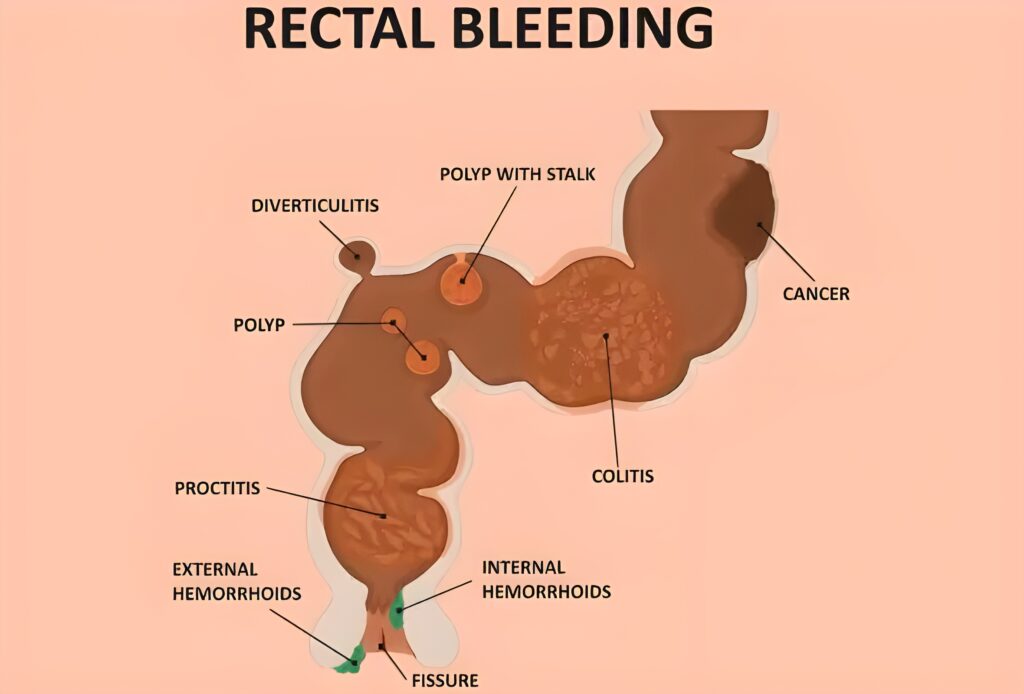
The vast majority of rectal bleeding cases in primary care are caused by benign (non-cancerous) conditions. UK research published in the British Journal of General Practice confirms that haemorrhoids and anal fissures are by far the most common causes. However, because rectal bleeding can occasionally indicate serious conditions, it is important to have persistent or unexplained bleeding assessed by a healthcare professional.
Haemorrhoids (Piles)
Haemorrhoids are the single most common cause of rectal bleeding. Community-based studies in the UK report that haemorrhoids affect between 13% and 36% of the general population, with some research suggesting up to 40% of adults are affected at some point. Haemorrhoids are swollen blood vessels in and around the rectum and anus that can bleed, particularly during bowel movements.
Bright red, painless bleeding is the most typical symptom of internal haemorrhoids. You might notice blood on toilet paper, streaks on your stool, or dripping into the toilet bowl. Other symptoms can include itching, discomfort, and a feeling of fullness or a lump around the anus. Haemorrhoids do not usually cause pain unless they become thrombosed (develop a blood clot) or prolapse and become trapped outside the anus.
Risk factors for developing haemorrhoids include straining during bowel movements, constipation, spending prolonged time sitting on the toilet, pregnancy, and being wight body. A high-fibre diet with adequate fluids can help prevent haemorrhoids by keeping stools soft and easy to pass.
Anal Fissures
An anal fissure is a small tear in the lining of the anus, typically caused by passing hard or large stools. According to NHS guidance on anal fissures, they are more common in people aged 15 to 40 and in young children. The key distinguishing feature from haemorrhoids is pain. If you experience sharp pain during bowel movements along with rectal bleeding, an anal fissure is the most likely cause.
The blood from an anal fissure is typically bright red and the bleeding usually stops quickly. Most acute fissures heal on their own within a few weeks with simple measures such as increasing fibre intake, staying hydrated, and using over-the-counter pain relief. Chronic fissures (lasting more than six weeks) may require prescription treatments or, occasionally, minor surgery.
Diverticular Disease
Diverticular disease occurs when small pouches (diverticula) develop in the wall of the large bowel. This condition is very common in the UK, particularly as we age. Research shows that diverticula are present in approximately 5-10% of people aged 45 and over, increasing to around 65% in those aged 65 and over, and up to 70% by age 80.
Most people with diverticula have no symptoms at all. However, diverticula contain weakened blood vessels that can burst and cause sudden, painless bleeding. This bleeding can sometimes be quite heavy, passing significant amounts of dark red blood. According to NICE guidelines on diverticular disease, between 10% and 25% of people with diverticular disease will experience an episode of acute diverticulitis (inflammation or infection of the pouches).
A high-fibre diet significantly reduces the risk of complications from diverticular disease. UK research found that people aged 50-70 who eat a high-fibre diet (25g per day) have a 40% lower chance of hospital admission with diverticular complications.
Inflammatory Bowel Disease
Inflammatory bowel disease (IBD), which includes Crohn’s disease and ulcerative colitis, causes chronic inflammation in the digestive tract that can result in rectal bleeding. Recent UK research has revealed that IBD affects far more people than previously thought. According to Crohn’s & Colitis UK, over 500,000 people in the UK are living with IBD, approximately 1 in every 123 people.
IBD typically causes rectal bleeding alongside other symptoms such as persistent diarrhoea, abdominal pain, cramping, weight loss, and fatigue. Ulcerative colitis specifically affects the large bowel and rectum, often causing bloody diarrhoea with mucus. If you have ongoing symptoms that suggest IBD, our gastroenterology specialists can arrange appropriate investigation and treatment.
Bowel Cancer
Whilst bowel cancer is a less common cause of rectal bleeding than the conditions above, it is an important diagnosis to exclude. According to Cancer Research UK, approximately 44,000 people are diagnosed with bowel cancer each year in the UK, making it the fourth most common cancer. Around 94% of cases are diagnosed in people over 50.
Rectal bleeding is often an early symptom of bowel cancer, which is why it should always be checked. UK research shows that over 50% of people with bowel cancer present with rectal bleeding combined with a persistent change in bowel habit. The good news is that bowel cancer is highly treatable when caught early. Nearly everyone survives bowel cancer when it is diagnosed at the earliest stage, highlighting the importance of seeking medical advice promptly.
Under NICE suspected cancer guidelines, adults aged 50 and over with unexplained rectal bleeding should be referred urgently for investigation via a two-week suspected cancer pathway.
When to Seek Medical Help
You should always have rectal bleeding checked by a healthcare professional to rule out more serious causes. Seek urgent medical attention or call 999 if you are bleeding heavily and cannot stop it. You feel dizzy, faint, or short of breath, you have severe abdominal pain, you are passing large amounts of blood, your skin is cold and clammy, or you are passing black, tarry stools. Do not drive yourself to hospital if you have these symptoms.
You should see your GP or visit our Urgent Care Centre promptly if you have persistent or recurrent rectal bleeding, bleeding that does not improve after a few days, bleeding accompanied by a change in bowel habit, unexplained weight loss, or you are aged 50 or over with new rectal bleeding.
Diagnosis and Treatment at Abbey Wood Hospital
At Abbey Wood Hospital, we offer comprehensive diagnostic services to identify the cause of rectal bleeding. Your assessment may include a physical examination and detailed medical history, digital rectal examination, blood tests including a full blood count to check for anaemia. Also stool tests including the faecal immunochemical test (FIT) to detect hidden blood, and referral for colonoscopy or flexible sigmoidoscopy if indicated.
Our Imaging and Diagnostics department can arrange appropriate investigations, and our gastroenterology specialists provide expert assessment and management. Treatment depends entirely on the underlying cause. Haemorrhoids and fissures often respond well to dietary changes, topical treatments, and improved bowel habits. More persistent cases may require procedures such as rubber band ligation or minor surgery. Conditions like IBD require ongoing specialist management.
Frequently Asked Questions
Is a small amount of blood in stool anything to worry about?
A small amount of bright red blood, particularly if you have been straining or have hard stools, is often caused by haemorrhoids or a fissure and may not be serious. However, any rectal bleeding should be checked by a healthcare professional to rule out more serious causes, especially if it persists or recurs.
What does the colour of blood in stool indicate?
Bright red blood usually indicates bleeding from the lower digestive tract (rectum or anus). Dark red or maroon blood may suggest bleeding from higher in the colon. Black, tarry stools indicate bleeding from the upper digestive tract, such as the stomach, and require urgent medical attention.
Can stress cause rectal bleeding?
Stress does not directly cause rectal bleeding. However, stress can worsen conditions like inflammatory bowel disease and may contribute to constipation or straining, which can aggravate haemorrhoids or cause anal fissures.
When should I be worried about blood in my stool?
You should seek prompt medical advice if bleeding persists for more than a few days. If you are over 50 with new rectal bleeding, you have a change in bowel habit, you experience unexplained weight loss, or you have a family history of bowel cancer.
If you are concerned about rectal bleeding, our GP Services and Urgent Care Centre can provide prompt assessment and arrange appropriate investigations. Visit Abbey Wood Hospital at Page Street, Mill Hill, London NW7 2ED. We are open 8am to 8pm Monday to Friday and 9am to 6pm at weekends. For more information, call 020 8358 7100 or book an appointment online.
Please note: This article provides general health information and is not a substitute for professional medical advice. If you are experiencing heavy rectal bleeding, feel faint, or have severe abdominal pain, call 999 immediately. Do not drive yourself to hospital.