
You have just twisted your ankle on an uneven pavement, landed awkwardly during a weekend football match, or felt something pull in your back while lifting a heavy box. The pain is immediate, the swelling is building, and the same question runs through your mind: is this a sprain, strain or fracture? Knowing the difference matters because each injury affects a different part of the body and requires a different approach to treatment and recovery. At Abbey Wood Hospital’s Urgent Care Centre, our experienced clinicians assess and treat these injuries every day, with on-site X-ray and imaging available for fast, accurate diagnosis.
In This Article
- What Are Sprains, Strains and Fractures?
- How to Tell the Difference
- First Aid: The PRICE Protocol
- What to Avoid in the First 72 Hours
- When to Visit Urgent Care
- Diagnosis and Imaging
- Treatment and Recovery Timelines
- Children and Common Injuries
- Preventing Sprains, Strains and Fractures
- Frequently Asked Questions
This comprehensive guide explains how to recognise the signs of each injury, what first aid steps to take immediately, and when you should seek professional medical assessment. Whether you are dealing with a sporting injury, a fall at home, or an accident at work, understanding whether you have a sprain, strain or fracture helps you respond correctly and recover faster.
What Are Sprains, Strains and Fractures?
Although these three injuries share similar symptoms such as pain, swelling and difficulty moving, they affect entirely different structures in your body. Understanding which tissue is involved is the first step towards getting the right care.
A sprain is an injury to a ligament, which is the tough, flexible band of tissue that connects one bone to another at a joint. Sprains happen when a joint is forced beyond its normal range of movement, stretching or tearing the ligament. According to the NHS, the most commonly sprained joints are the ankle, wrist, thumb and knee.
A strain is an injury to a muscle or tendon, which is the cord of tissue connecting muscle to bone. Strains occur when a muscle is overstretched, pulled or torn. They are most common in the back, legs and feet. Strains can develop suddenly from a single event, such as lifting something heavy, or gradually from repetitive movements over time.
A fracture is a partial or complete break in a bone. Fractures range from tiny hairline cracks that may not be visible on an initial X-ray to complete breaks where the bone separates into two or more pieces. In severe cases, the broken bone may pierce through the skin, which is known as a compound or open fracture and requires emergency treatment.
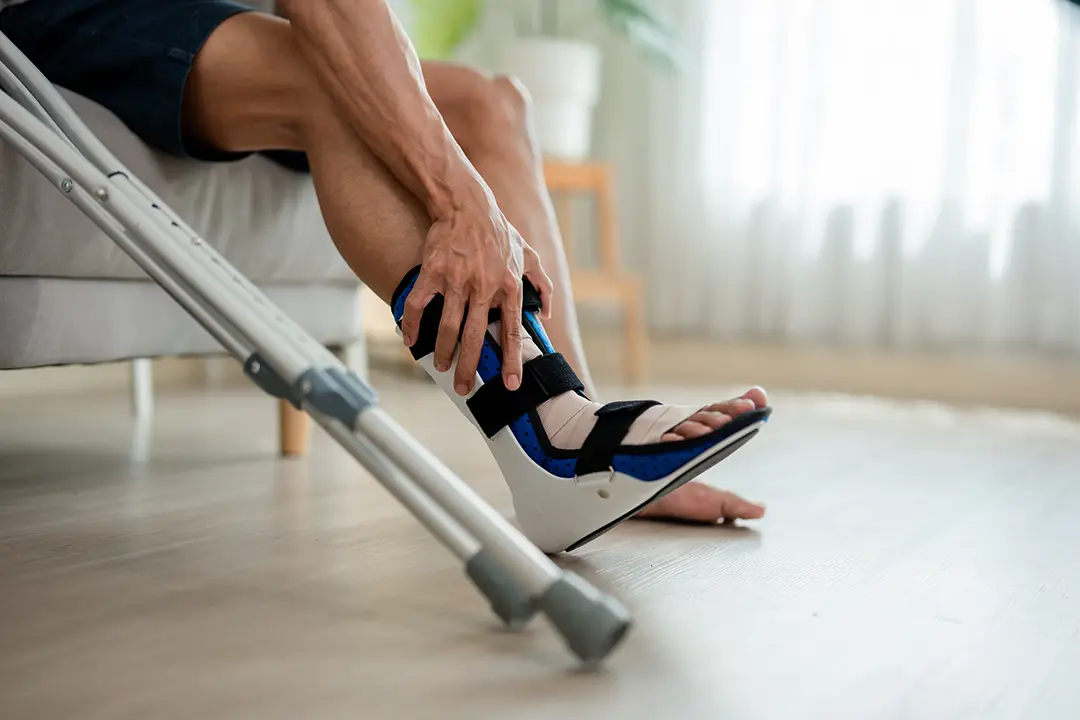
Knowing whether you have a sprain, strain or fracture helps you take the right steps towards treatment and recovery.
How to Tell the Difference Between a Sprain, Strain and Fracture
Because sprains, strains and fractures can all cause pain, swelling and reduced movement, telling them apart without medical assessment can be difficult. However, there are several clues that can help you work out which type of injury you may have.
Signs of a Sprain
If you have sprained a ligament, you will typically notice pain and tenderness around the joint rather than directly over the bone. Swelling and bruising usually develop within hours. You may still be able to move the joint and bear some weight, although this will be painful. In mild cases, you might hear a slight popping sound at the time of injury. The joint may also feel unstable or loose, particularly with ankle and knee sprains.
Signs of a Strain
Muscle strains tend to produce pain in the muscle itself rather than at a joint. You may feel a sudden sharp pain, cramping or muscle spasms. Swelling can occur, but bruising is often less visible than with a sprain. Stiffness and weakness in the affected muscle are common, and the pain typically worsens when you try to use or stretch the muscle. Chronic strains from repetitive use may build up gradually, starting as a dull ache that becomes more persistent over time.
Signs of a Fracture
Fractures generally produce more severe, immediate pain than sprains or strains. The pain is typically sharp and localised directly over the bone. If the area looks visibly misshapen or is pointing at an unusual angle, a fracture is very likely. You may hear a cracking or grinding sound at the time of injury. Other warning signs include an inability to bear any weight on the injured area, numbness or tingling, and skin that appears blue, grey or cold around the injury site. The NHS guidance on broken ankles advises seeking immediate medical attention if the injury looks deformed or if the skin colour changes.
First Aid: The PRICE Protocol for Sprains and Strains
For immediate first aid following a suspected sprain or strain, UK health guidance recommends the PRICE protocol. This approach helps to reduce swelling, protect the injury and support early recovery.
Protect the injured area from further damage using a support, brace or suitable footwear. Rest the injury for at least 48 to 72 hours, avoiding any activities that cause pain. Ice the area as soon as possible by applying an ice pack or a bag of frozen peas wrapped in a tea towel for up to 20 minutes every two to three hours. Compress the area with a bandage to reduce swelling and provide support. Elevate the injured limb above heart level whenever possible, resting it on a pillow or cushion.
Over-the-counter painkillers such as paracetamol can help manage discomfort. Ibuprofen gel applied directly to the skin can also reduce swelling. If you need stronger relief, ibuprofen tablets may help, though these should be avoided if you have stomach problems or are taking certain other medications. Our on-site Pharmacy can advise on the most suitable options for your situation.
What to Avoid in the First 72 Hours: The HARM Principle
Equally important to knowing what to do is knowing what to avoid. During the first 72 hours after a sprain or strain, UK medical guidance warns against four things that can increase swelling and slow recovery. These are remembered using the acronym HARM.
Heat should be avoided, including hot baths, saunas and heat packs, as warmth increases blood flow and swelling. Alcohol increases inflammation and can mask pain, making it harder to judge the severity of your injury. Running or any form of vigorous exercise risks further damage to the injured tissue. Massage to the affected area can increase swelling and bleeding within the tissue during the acute phase.
Once the initial swelling has settled, typically after 48 to 72 hours, gentle movement is encouraged. Keeping a joint or muscle completely still for too long can lead to stiffness and a longer overall recovery.
When to Visit Urgent Care for a Sprain, Strain or Fracture
While many mild sprains and strains improve with home care, certain signs indicate you need a professional assessment. If you are unsure whether your injury is a sprain, strain or fracture. Then it is always better to get it checked rather than risk complications from an untreated break.
Visit our London Urgent Care Centre if the pain is severe or getting worse rather than improving, if there is significant swelling or bruising that continues to increase, if you cannot put any weight on the injured area, if the joint or limb feels very stiff or difficult to move, or if the injury has not improved after several days of home treatment.
When to Call 999 or Go to A&E
Some injuries require emergency care rather than urgent care. Call 999 or go directly to A&E if you heard a clear cracking sound at the time of injury and the area looks deformed, if a bone is visible through the skin (compound fracture), if the injured area is numb, tingling or has turned blue or grey, if there is severe uncontrollable bleeding, or if the injury involves the hip, pelvis or spine. Our urgent care team can treat minor fractures of the hands, wrists, feet and ankles, along with sprains and strains of all severities.
How Sprains, Strains and Fractures Are Diagnosed
Accurate diagnosis is essential for proper treatment. When you visit Abbey Wood Hospital, a clinician will begin with a thorough physical examination, checking for pain points, swelling, deformity, range of movement and joint stability.
If a fracture is suspected, an X-ray is usually the first imaging step. Our Imaging and Diagnostics department offers on-site X-ray, ultrasound, MRI and CT scanning, meaning you can often receive a diagnosis and begin treatment in a single visit rather than waiting weeks for NHS imaging appointments.
The Ottawa Ankle Rules
Clinicians often use a set of clinical guidelines called the Ottawa Ankle Rules to determine whether an ankle or foot injury requires an X-ray. Under these rules, an X-ray is generally recommended if there is pain near the ankle bones combined with tenderness at the back edge or tip of either ankle bone, or if the person cannot bear weight for four steps both immediately after the injury and during the clinical assessment. These guidelines help ensure that imaging is used appropriately, avoiding unnecessary X-rays while catching fractures that need treatment.
Treatment and Recovery Timelines
Recovery times vary depending on the type and severity of the injury. Understanding realistic timelines helps set expectations and supports a safe return to normal activity.
Treating Sprains and Strains
Most mild to moderate sprains and strains begin to feel better within two weeks, although the NHS advises avoiding strenuous exercise for up to eight weeks to reduce the risk of re-injury. Severe sprains, particularly those involving significant ligament tears, can take several months to fully recover. Treatment typically involves PRICE therapy, pain management and a gradual return to movement.
For injuries that are slow to improve, physiotherapy plays an important role. A physiotherapist can guide you through exercises to restore strength, flexibility and joint stability. At Abbey Wood Hospital, our physiotherapy team works closely with our urgent care and orthopaedic specialists to provide coordinated care from diagnosis through to full recovery. Full return to sporting activities after a moderate sprain typically takes around 12 weeks, though severe muscle injuries may require longer.
Treating Fractures
The treatment for a fracture depends on the type and location of the break. Minor fractures may heal with a supportive boot, splint or plaster cast to keep the bone still while it knits back together. More complex breaks may require the bones to be realigned by a doctor, a procedure known as reduction, or in some cases surgical fixation with plates, screws or pins through our Day Surgery unit.
A typical fracture takes six to eight weeks to heal, although this varies depending on the bone involved and the severity of the break. The NHS notes that a broken ankle, for example, usually takes up to eight weeks. Following healing, physiotherapy is often recommended to restore movement, rebuild strength and prevent stiffness. Your clinician will advise when it is safe to return to weight-bearing activities, exercise and sport.
Children and Common Injuries
Children are particularly prone to sprains, strains and fractures due to their active lifestyles and still-developing bones. One of the most common childhood fractures is a buckle fracture, where the bone slightly crushes in on itself rather than snapping completely. These injuries are most often seen in the wrist after a fall onto an outstretched hand.
Buckle fractures typically heal quickly. Standard treatment involves wearing a splint day and night for three weeks, followed by a further three weeks of avoiding rough play and contact sports. If your child has taken a fall and is complaining of persistent pain, swelling or difficulty using the injured area, it is worth having them assessed. Our GP Services and Urgent Care Centre can examine children of all ages and arrange appropriate imaging if needed. For further guidance on when to seek urgent help for unwell children, our article on flu symptoms in children and urgent care provides helpful advice on recognising warning signs.
Preventing Sprains, Strains and Fractures
While accidents cannot always be avoided, there are practical steps you can take to reduce your risk of musculoskeletal injuries.
Warming up properly before exercise prepares your muscles, tendons and ligaments for activity and significantly reduces injury risk. Wearing appropriate footwear that provides good ankle support is particularly important for activities on uneven ground. Building overall muscle strength through regular exercise helps to stabilise your joints and protect your bones. Maintaining a healthy diet rich in calcium and vitamin D supports bone density, which is especially important as you get older.
At home, keeping walkways clear of clutter, ensuring good lighting on stairs and using non-slip mats in bathrooms can help prevent falls. For older adults, regular balance exercises and strength training are effective at reducing the risk of falls and fall-related fractures. If you have concerns about bone health or repeated injuries, a consultation with our rheumatology team can provide further assessment and guidance.
Frequently Asked Questions
How can I tell if my ankle sprained or broken?
If the pain is centred on the soft tissue around the joint and you can still bear some weight, it is more likely a sprain. If the pain is directly over the bone, the area looks misshapen, or you cannot put any weight on it at all, a fracture is more likely. The only way to confirm whether a bone is broken is with an X-ray. So seek medical assessment if you are unsure.
Should I use heat or ice on a sprain?
For the first 48 to 72 hours, use ice only. Apply an ice pack wrapped in a cloth for up to 20 minutes every two to three hours. Avoid heat, including hot baths and heat packs, during this period as it increases blood flow and can worsen swelling. After three days, gentle warmth may help ease stiffness and promote healing.
How long does a sprain or strain take to heal?
Most mild sprains and strains improve noticeably within two weeks. However, the NHS recommends avoiding strenuous activity for up to eight weeks to prevent re-injury. Severe sprains or strains involving significant tears can take several months to fully recover, and may benefit from physiotherapy to restore strength and mobility.
Can a sprain be as painful as a fracture?
Yes, a severe sprain can cause as much pain and swelling as a minor fracture. A badly torn ligament can be extremely painful and may take longer to heal than a simple hairline fracture. This is one of the key reasons why professional assessment and imaging are important when symptoms are severe or do not improve.
What is a stress fracture and how is it different from a sprain?
A stress fracture is a tiny crack in a bone caused by repetitive force or overuse, rather than a single traumatic event. They are common in the feet and shins among runners and athletes. Unlike a sprain, which affects ligaments, a stress fracture produces pain that worsens with activity and improves with rest. A simple hop test can help differentiate between shin splints and a stress fracture. If hopping on the injured leg causes sharp, localised pain, it may suggest a stress fracture rather than more diffuse shin pain.
Do I need to go to A&E or can urgent care treat my injury?
Urgent care centres like ours at Abbey Wood Hospital can treat most minor fractures of the hands, wrists, feet and ankles, along with sprains and strains. We have on-site X-ray and imaging for fast diagnosis. You should go to A&E if a bone is visible through the skin, the injury involves the hip, pelvis or spine, the area is severely deformed, or there are signs of restricted blood flow such as numbness or blue skin.
Get Expert Assessment When You Need It
Whether you are dealing with a twisted ankle, a pulled muscle or a suspected break, getting an accurate diagnosis early makes a real difference to your recovery. If you are unsure whether your injury is a sprain, strain or fracture, our experienced clinicians can assess you promptly, with on-site X-ray and imaging available for same-day results.
At Abbey Wood Hospital’s Urgent Care Centre, we treat walk-in patients seven days a week, with no need for a GP referral. From initial assessment through to imaging, treatment and physiotherapy, we provide complete care under one roof. If your injury needs specialist orthopaedic input, our orthopaedic consultants are available for rapid follow-up appointments.
Contact Abbey Wood Hospital at Page Street, Mill Hill, London NW7 2ED. We are open 8am to 8pm Monday to Friday and 9am to 6pm at weekends. Call 020 8358 7100 or book an appointment online.
This article provides general health information and does not constitute medical advice. If you are concerned about an injury and are unsure whether it requires urgent medical attention, please contact NHS 111 or visit your nearest urgent care centre for professional assessment.