
Hand and finger injuries are among the most common reasons people visit urgent care. Whether you have jammed a finger playing sport, caught your hand in a door, or taken a fall onto an outstretched arm, the pain, swelling and uncertainty can be distressing. The challenge is knowing whether your injury needs professional treatment or can be managed at home. At Abbey Wood Hospital’s Urgent Care Centre, we provide same-day assessment and on-site X-ray for hand and finger injuries, so you can get a clear diagnosis and appropriate treatment without a long wait.
In This Article
This guide explains how to recognise when hand and finger injuries need medical attention, what to expect during your visit, and how long recovery typically takes.
Common Hand and Finger Injuries
The hand is a complex structure containing 27 bones, along with numerous tendons, ligaments and joints. This complexity makes it vulnerable to a range of injuries, particularly during sports, DIY activities, and everyday accidents.
Types of Hand and Finger Injuries
Fractures: Broken bones in the fingers, thumb or hand are common following direct impact, falls, or twisting injuries. The small bones of the fingers (phalanges) and the bones in the palm (metacarpals) can crack or break completely. The little finger, often called the pinky, is particularly vulnerable because of its exposed position at the edge of the hand. A broken pinky finger is one of the most frequent finger fractures we see, often occurring when catching a ball awkwardly or during falls.
Sprains: Ligament injuries occur when the tough tissue connecting bones at a joint is stretched or torn. Finger sprains often happen during ball sports when a finger is bent backwards or sideways.
Mallet finger: This injury affects the tendon that straightens the tip of the finger, causing the end joint to droop. It typically occurs when a ball or other object strikes the fingertip directly.
Dislocations: When the bones at a joint are forced out of their normal position, the finger may look obviously crooked or misshapen.
Common Causes of Hand Injuries
Hand and finger injuries can happen to anyone, but certain activities carry higher risk. Sports involving balls, such as basketball, cricket, netball and rugby, account for many finger fractures and sprains. DIY and manual work, particularly using power tools, hammers or heavy materials, frequently lead to crush injuries and fractures. Falls onto an outstretched hand are another common cause, especially on slippery surfaces or during cycling. Everyday accidents such as catching a finger in a door or drawer cause significant numbers of injuries, particularly in children.
For a broader overview of how to tell whether you have a sprain, strain or fracture, our comprehensive guide on recognising different injury types explains the key differences and when to seek help.
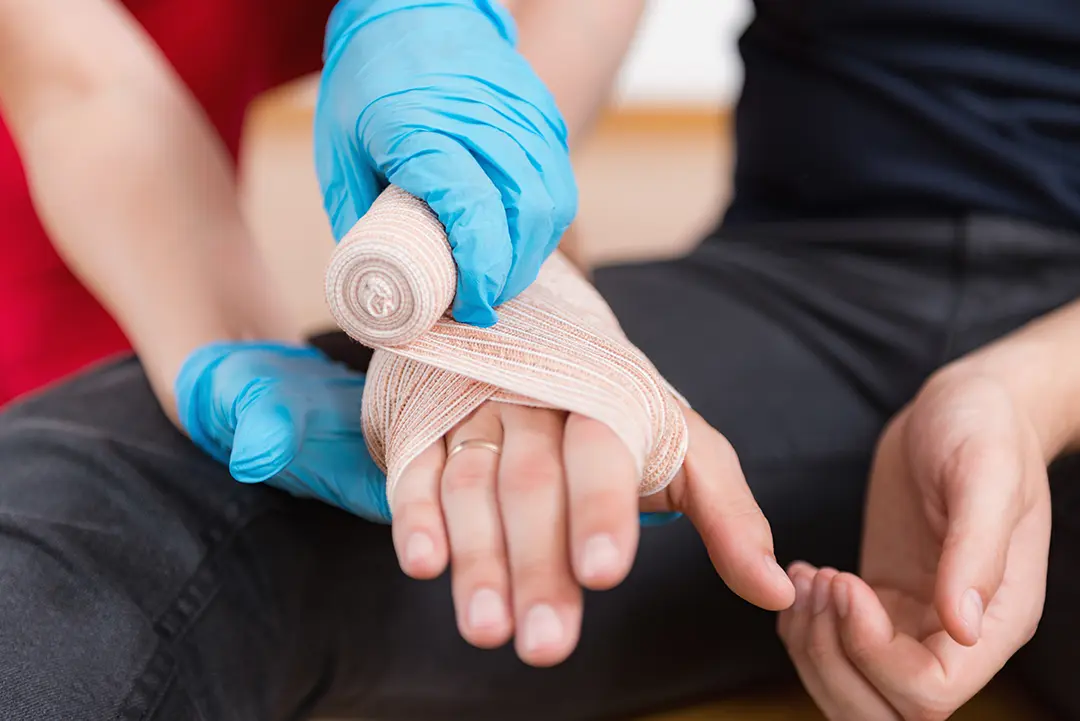
Same-day X-ray and assessment for hand and finger injuries at Abbey Wood Hospital, North London.
Signs You May Have a Broken Finger or Hand
It can be difficult to tell whether a finger is broken, dislocated or badly sprained, as the symptoms often overlap. According to the NHS, a broken finger or thumb is likely to be painful, swollen, bruised and difficult to move. The finger may also change colour or feel numb.
Signs that suggest a fracture rather than a simple sprain include severe pain directly over the bone (rather than the soft tissue around a joint), significant swelling that develops rapidly, an inability to move the finger normally, and a visible deformity or unusual angle. You may have heard a crack or snap at the time of injury.
Sharp pain in a finger joint when pressed can indicate several conditions. If the pain is directly over a bone, a fracture may be present. If the pain is around the joint itself, you may have a sprain, dislocation, or early signs of joint inflammation. Pain that started after an injury should be assessed promptly, while pain that developed gradually without trauma may need investigation for other causes.
Because the symptoms of hand and finger injuries can be similar regardless of the underlying cause, an X-ray is usually needed to confirm whether a bone is broken. Our Imaging and Diagnostics department provides on-site X-ray with rapid results, meaning you can receive a diagnosis and begin treatment in a single visit.
When to Visit Urgent Care for Hand and Finger Injuries
You should seek same-day assessment at an urgent care centre if your finger or hand is painful, swollen and bruised, if the finger is stiff or difficult to move, if pain and swelling have not started to improve after a few days of home treatment, or if you suspect a fracture but the finger is not obviously deformed.
At Abbey Wood Hospital, our Urgent Care Centre is open seven days a week with walk-in appointments available. Each consultation is priced at £99, which includes clinical assessment by an experienced urgent care doctor. If an X-ray is needed, this can be arranged immediately on-site. Full pricing for X-rays and other imaging is available on our fees page.
Unlike many NHS walk-in centres, which may not have X-ray facilities on-site or involve hours of waiting, Abbey Wood Hospital offers immediate access to both X-ray and ultrasound. The typical NHS pathway often means being referred onwards to a fracture clinic, where you could wait days for an appointment. At Abbey Wood, we diagnose and treat your injury on the same day, with little to no wait, so you leave with answers and a clear treatment plan rather than uncertainty.
Getting a prompt diagnosis matters. Untreated fractures can heal in the wrong position, leading to long-term stiffness, weakness or deformity. An early X-ray and appropriate splinting help ensure the best possible outcome.
When to Go Straight to A&E
Some hand and finger injuries require emergency care rather than urgent care. The NHS advises going directly to A&E if the finger is pointing at an odd angle, the finger looks blue or feels completely numb, you can see bone through a cut or there is bone poking out of the skin, or there is severe uncontrollable bleeding.
These signs suggest a more serious injury such as a compound fracture, significant nerve or blood vessel damage, or a dislocation that needs immediate reduction. Do not attempt to straighten a visibly deformed finger yourself. Call 999 or ask someone to drive you to A&E.
First Aid While You Wait
If you think you may have broken a finger or injured your hand, there are steps you can take while waiting to see a doctor. Try not to move the affected finger. If you are confident doing so, you can gently tape it to the neighbouring finger for support, a technique known as buddy strapping. Raise your hand above the level of your heart to help reduce swelling. Apply an ice pack wrapped in a tea towel for 15 to 20 minutes every two to three hours. Take paracetamol to help ease pain.
Importantly, remove any rings from the injured hand as soon as possible. Swelling can develop quickly, and a ring that cannot be removed may need to be cut off later.
Diagnosis and Treatment at Abbey Wood Hospital
When you visit our Urgent Care Centre with a hand or finger injury, a clinician will examine the affected area, checking for pain points, swelling, movement and stability. If a fracture is suspected, you will be referred for an X-ray, which can be done immediately on-site.
Treatment depends on the type and severity of the injury. For a straightforward fracture, the doctor may realign the bone if necessary (using local anaesthetic to numb the area) and then apply a splint, cast or buddy strapping to hold the finger in position while it heals. For soft tissue injuries like sprains, strapping and advice on rest and rehabilitation are usually sufficient.
If your injury is more complex, for example a fracture in multiple places or one involving tendon or nerve damage, you may need referral to a specialist hand surgeon. Abbey Wood Hospital has consultant orthopaedic surgeons specialising in hand and wrist conditions, including Dr David Bodansky and Dr Gavin Schaller, who can provide expert assessment and surgical treatment when required. For injuries requiring detailed soft tissue imaging, a private MRI scan can be arranged promptly.
Recovery Timelines for Hand and Finger Injuries
Fractured finger recovery time varies depending on the injury. A broken finger or thumb typically heals within six to eight weeks, although it may take three to four months for full strength to return to the hand. A fractured pinky finger follows a similar timeline, though because it bears less load than the index or middle finger, some people find they can return to light activities slightly sooner. Sprains generally improve faster, with most mild to moderate injuries feeling significantly better within two to four weeks.
Specific injuries have their own requirements. Mallet finger, for example, requires the fingertip to be held straight in a splint for six to eight weeks continuously. Bending the finger during this time can prevent healing and result in a permanent droop.
Once the initial healing period is complete, gentle movement is important to prevent stiffness. Your clinician may recommend hand exercises or refer you to physiotherapy to restore full function. Return to contact sports or activities that put strain on your fingers should be discussed with your doctor.
Preventing Hand and Finger Injuries
While not all injuries can be avoided, some simple precautions reduce risk. Wearing appropriate protective gloves during DIY, gardening and manual work helps prevent crush injuries and cuts. Using proper technique when catching balls and warming up before sport reduces strain on fingers. Taking care around doors, especially with children present, prevents many household finger injuries. If you work with tools or machinery, following safety guidelines and staying focused on the task significantly reduces accident risk.
Frequently Asked Questions
Do I need an X-ray for a finger injury?
If your finger is painful, swollen and difficult to move, an X-ray is usually recommended to determine whether the bone is broken. It can be difficult to tell the difference between a fracture and a bad sprain without imaging. At Abbey Wood Hospital, X-rays are available on-site with same-day results.
When is it too late to fix a broken finger?
Ideally, a broken finger should be assessed and treated within a few days of injury. However, if you have delayed seeking treatment, it is not necessarily too late. Fractures that are healing in a poor position can sometimes be re-broken and reset within the first few weeks. After around four to six weeks, the bone begins to heal more firmly, and correction becomes more difficult. If you suspect you have an untreated fracture, even weeks after the injury, it is still worth getting an X-ray to assess the situation. Your doctor can advise on whether intervention is possible or whether the injury will heal acceptably without further treatment.
Why does my finger joint hurt when I press on it?
Sharp pain in a finger joint when pressed can have several causes. If the pain followed an injury, you may have a sprain, a small fracture, or damage to the cartilage or ligaments around the joint. Pain that developed without an obvious injury could indicate early arthritis, inflammation of the joint lining, or conditions such as trigger finger. If the pain is persistent, worsening, or accompanied by swelling, stiffness or locking of the finger, an assessment can identify the cause. X-rays can rule out fractures, and further investigation may be recommended if needed.
Can I drive with a broken finger?
It depends on which hand and finger is affected, and whether you can safely grip the steering wheel and maintain control of the vehicle. You should also check with your insurance company. If in doubt, avoid driving until you have been assessed and treated.
How long do I need to wear a splint?
Most finger fractures require splinting for around three to four weeks, though this varies depending on the type of break. Mallet finger injuries require six to eight weeks of continuous splinting. Your clinician will advise on the specific timeframe for your injury.
What if my finger still hurts after the splint comes off?
Some stiffness and discomfort is normal after a period of immobilisation. Gentle exercises will help restore movement. If pain and swelling have not started to ease, or if you are concerned the injury is not healing properly, see your GP or return to urgent care for reassessment.
Get Your Hand or Finger Injury Assessed Today
If you have injured your hand or finger and are unsure whether it needs treatment, do not wait and wonder. A prompt assessment can confirm whether you have a fracture, ensure the injury is treated correctly, and give you peace of mind.
At Abbey Wood Hospital’s Urgent Care Centre, we offer walk-in appointments seven days a week with on-site X-ray and experienced clinicians ready to assess and treat hand and finger injuries. If specialist input is needed, our orthopaedic team is available for rapid follow-up.
Contact Abbey Wood Hospital at Page Street, Mill Hill, London NW7 2ED. We are open 8am to 8pm Monday to Friday and 9am to 6pm at weekends. Call 020 8358 7100 or book an appointment online.
This article provides general health information and does not constitute medical advice. If you have a severe hand or finger injury with visible deformity, numbness, or exposed bone, go directly to A&E or call 999.