
Tired, heavy, or drooping eyelids can make you look older and more fatigued than you feel. For some people, excess eyelid skin even obstructs their vision. Blepharoplasty (eyelid surgery) addresses these concerns by removing excess skin, muscle, or fat from the upper or lower eyelids. The result is a more refreshed, youthful, and alert appearance. At Abbey Wood Hospital, our consultant plastic surgeon performs blepharoplasty in a safe, CQC-registered private hospital setting in North London.
In This Article
- What Is Blepharoplasty?
- Why Blepharoplasty Is Trending in 2026
- Types of Eyelid Surgery
- Are You a Good Candidate?
- What Happens at Your Consultation
- The Blepharoplasty Procedure
- Recovery and Aftercare
- Risks and Complications
- NHS Funding and Private Options
- Blepharoplasty Cost in the UK
- Why Choose Abbey Wood Hospital
- Frequently Asked Questions
This comprehensive guide explains what blepharoplasty involves, who benefits from the procedure, and what results you can expect.
What Is Blepharoplasty?
Blepharoplasty is a surgical procedure that rejuvenates the appearance of the eyelids. The surgery removes excess skin, muscle, or bulging fat from the upper or lower eyelids. It addresses drooping or hooded eyelids, eye bags, puffiness, and wrinkles around the eyes. The procedure creates a more youthful, refreshed, and alert appearance.
According to NHS guidance, eyelid surgery changes the look of hooded or drooping eyelids or eye bags. While most people seek blepharoplasty for cosmetic reasons, the procedure can also improve vision when excess upper eyelid tissue obstructs the visual field.
Cosmetic vs Functional Blepharoplasty
Cosmetic blepharoplasty addresses aesthetic concerns such as tired-looking eyes, sagging skin, and under-eye bags. Functional blepharoplasty treats drooping eyelids that impair vision. Some patients benefit from both aspects of the procedure.
Why Blepharoplasty Is Trending in 2026
Eyelid surgery has become one of the fastest-growing cosmetic procedures in the UK. According to the British Association of Aesthetic Plastic Surgeons (BAAPS) 2024 annual audit, blepharoplasty procedures increased by 13% between 2023 and 2024. The procedure now ranks as the third most popular cosmetic surgery in the UK, overtaking abdominoplasty.
Globally, eyelid surgery was the most common cosmetic surgical procedure in 2024, with over 2.1 million procedures performed worldwide. This represents a 24% increase from the previous year.
Why the Surge in Popularity?
Several factors explain the growing interest in blepharoplasty. Video calls and screen time have made people more aware of their appearance, particularly around the eyes. The procedure offers noticeable results with relatively quick recovery compared to more extensive facial surgery. Many people prefer subtle facial rejuvenation rather than dramatic changes, and eyelid surgery delivers natural-looking improvement.
Types of Eyelid Surgery
Blepharoplasty can address the upper eyelids, lower eyelids, or both. Each type targets different concerns.
Upper Eyelid Blepharoplasty
Upper eyelid surgery addresses excess skin, fat deposits, and weakened muscles in the upper eyelids. Over time, these changes cause drooping or hooding that can make the eyes appear tired or heavy. In severe cases, the excess skin obstructs peripheral vision.
The surgeon makes an incision in the natural crease of the upper eyelid. This allows removal of excess tissue while hiding the scar in the natural fold. The result is a more open, alert, and youthful eye appearance.
Lower Eyelid Blepharoplasty
Lower eyelid surgery targets under-eye bags, puffiness, fine lines, and wrinkles. These changes develop with age as fat deposits shift and skin loses elasticity. The procedure removes or repositions excess fat, tightens sagging skin, and smooths the lower eye area.
The surgeon can make the incision just below the lower lashes or on the inside of the eyelid (transconjunctival approach). The transconjunctival technique removes fat through an incision hidden inside the lid, leaving no visible external scar.
Combined Upper and Lower Blepharoplasty
Many patients choose to address both upper and lower eyelids in a single procedure. This comprehensive approach rejuvenates the entire eye area. According to Leeds Teaching Hospitals NHS Trust, combined surgery on all four eyelids takes between one and three hours.
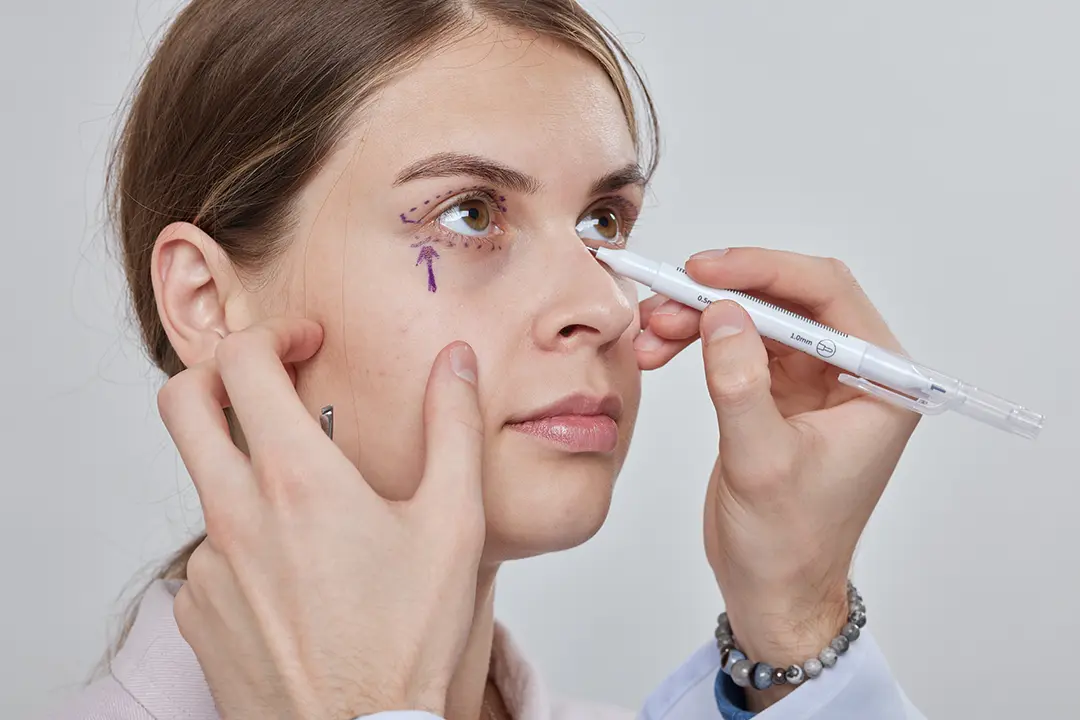
Consultant-led blepharoplasty at Abbey Wood Hospital, Mill Hill, North London.
Are You a Good Candidate for Blepharoplasty?
Blepharoplasty suits people who are bothered by drooping, hooded, or puffy eyelids. Understanding whether the procedure addresses your specific concerns helps you decide if eyelid surgery is right for you.
Signs You May Benefit from Eyelid Surgery
Good candidates for blepharoplasty typically experience excess skin on the upper eyelids that creates a hooded appearance, difficulty applying makeup due to sagging upper lids, puffiness or bags under the eyes that make them look tired, drooping upper eyelids that obstruct vision, and fine lines or wrinkles around the eyes.
Important Considerations
Your surgeon will assess your suitability during the consultation. They will evaluate factors that may increase surgical risk, including diabetes, thyroid eye disease, dry eye conditions, and certain medications. If you smoke, your surgeon will recommend stopping several weeks before surgery. The NHS notes that smokers have known post-operative healing problems.
Realistic expectations are essential. Blepharoplasty creates significant improvement but cannot stop the natural ageing process. Some patients may need additional procedures in future, such as a brow lift, if droopiness develops again.
What Happens at Your Consultation
The consultation is your opportunity to discuss your concerns and goals with an experienced plastic surgeon. Dr Hakan Tekin, our Medical Director and Aesthetic & Plastic Surgeon, performs all blepharoplasty procedures at Abbey Wood Hospital.
Medical Assessment
Your surgeon will take a comprehensive medical history and conduct a physical examination. This includes evaluating your eyelids, assessing skin elasticity, and checking for conditions that may affect the procedure. You will need to disclose any medications you take, particularly blood-thinning medicines such as aspirin or warfarin.
Discussion of Goals and Options
Your surgeon will discuss what you hope to achieve and explain which approach best addresses your concerns. They will outline the specific surgical plan, discuss expected outcomes, and address any questions. You will receive information about risks and benefits to help you make an informed decision.
Cooling Off Period
After your consultation, you will have time to consider whether to proceed. This cooling off period ensures you feel confident about your decision before booking surgery.
The Blepharoplasty Procedure
Understanding what happens during surgery helps you prepare and know what to expect.
Anaesthesia
Blepharoplasty can be performed under local anaesthetic or general anaesthetic depending on the extent of surgery and your preference. Upper eyelid blepharoplasty is often performed under local anaesthetic, while lower eyelid surgery or combined procedures typically use general anaesthetic.
Duration of Surgery
According to NHS guidance, eyelid surgery generally takes 45 minutes to two and a half hours. The duration depends on whether you are having upper eyelids, lower eyelids, or both treated. Leeds Teaching Hospitals NHS Trust notes that surgery on all four eyelids can take one to three hours.
The Surgical Technique
For upper eyelid surgery, the surgeon makes an incision along the natural crease of the eyelid. They remove excess skin, muscle, and fat as needed, then close the incision. The scar is hidden within the natural fold.
For lower eyelid surgery, the incision is made just below the lash line or inside the lower lid. The surgeon removes or repositions excess fat and tightens sagging skin. The transconjunctival approach leaves no external scar.
Going Home
Blepharoplasty is typically performed as a day-case procedure. Most people go home the same day once their surgeon confirms it is safe.
Recovery and Aftercare
Recovery from blepharoplasty is relatively straightforward compared to more extensive procedures. Following your surgeon’s aftercare instructions ensures the best results.
Immediate Recovery
After surgery, thin sticky strips (suture strips) support the eyelids. These are usually removed up to one week later. If your surgeon does not use self-dissolving sutures, stitches are typically removed five to seven days after the operation.
Your surgeon will apply antibiotic ointment to protect the eyes. This may cause temporary blurred vision. You may experience puffy and numb eyelids, watery or irritated eyes, and bruising in the days following surgery.
First Two Weeks
Most people take about two weeks off work to recover, depending on their occupation. You will not be able to drive for several days after the operation. Bruises and redness may take several weeks to fade.
During recovery, you should prop your head up with pillows when resting to reduce swelling, gently clean your eyelids using prescribed ointment or eye drops, apply cold compresses to help reduce swelling, and wear sunglasses to protect your eyes from sun and wind.
Avoiding Complications
Your surgeon will advise you to avoid smoking, wearing contact lenses, and wearing eye makeup during the initial healing period. Strenuous activity should be avoided for at least one week. You can usually resume exercise and contact lens use after three to four weeks following your surgeon’s guidance.
Long-Term Results
Most patients make a full recovery within one month. The scarring may feel tight for a few months as it settles. Final results become fully visible once all swelling has resolved. Blepharoplasty delivers long-lasting results, though it cannot stop natural ageing entirely.
Risks and Complications
Like all surgical procedures, blepharoplasty carries some risks. Understanding these helps you make an informed decision.
Common Side Effects
Following surgery, it is common to experience puffy and numb eyelids, watery or irritated eyes, bruising, and temporary discomfort. These effects are normal and resolve as healing progresses.
Potential Complications
According to NHS guidance, potential complications include blurred or double vision, noticeable scarring, dry eyes, asymmetrical results, and difficulty closing the eyes fully during sleep. These complications are uncommon when surgery is performed by an experienced, qualified surgeon.
Rare but Serious Risks
Rarely, surgery can result in the lower eyelid turning outwards (ectropion), injury to eye muscles, or bleeding into the eye socket. Very rarely, a bleed tracking behind the eyeball (retrobulbar bleed) can occur, which threatens sight. Choosing an experienced surgeon in a properly equipped facility minimises these risks.
NHS Funding and Private Options
Understanding your options helps you plan your treatment pathway.
When the NHS Funds Eyelid Surgery
The NHS funds blepharoplasty only for functional reasons, not cosmetic concerns. If excess upper eyelid tissue obstructs your visual field and significantly affects daily activities, you may qualify for NHS-funded surgery.
NHS criteria are strict. Eligibility typically requires visual field tests proving that droopy eyelids obstruct vision, photographic evidence confirming the severity, and demonstrated impact on quality of life and essential activities such as driving or working. Cosmetic concerns alone do not qualify for NHS funding.
Benefits of Private Treatment
Most people seeking blepharoplasty choose private treatment. Private care offers several advantages: shorter waiting times (typically weeks rather than months), choice of your consultant surgeon, treatment based on your goals rather than strict eligibility criteria, and a comfortable, personalised experience.
At Abbey Wood Hospital, we offer prompt consultations and surgery dates to suit your schedule.
Blepharoplasty Cost in the UK
According to NHS guidance, blepharoplasty costs between £2,000 and £6,000 in the UK. You should also factor in the cost of consultations, follow-up care, and any further treatment that may be needed.
The cost varies depending on whether you are having upper eyelids, lower eyelids, or both treated. Combined upper and lower blepharoplasty typically costs more than treating one area alone.
At Abbey Wood Hospital, we provide transparent pricing with no hidden costs. Full pricing information is available on our fees page. We welcome both self-pay and insured patients.
Why Choose Abbey Wood Hospital for Blepharoplasty
Abbey Wood Hospital provides consultant-led blepharoplasty in a CQC-registered private hospital setting. Our approach prioritises safety, natural results, and patient satisfaction.
Consultant-Led Care
Dr Hakan Tekin, our Medical Director and Aesthetic & Plastic Surgeon, performs all eyelid surgery procedures. He brings extensive experience in facial aesthetics including blepharoplasty, facelift, brow lift, and rhinoplasty. You receive care from a single consultant throughout your treatment journey.
Hospital-Based Safety
Unlike high street clinics, we operate within a fully functioning hospital environment. Our Day Surgery Unit provides modern surgical facilities with appropriate monitoring and support. This setting ensures immediate access to emergency care if needed.
Comprehensive Eye Care
Abbey Wood Hospital offers complete eye care services. Our Ophthalmology department can assess any underlying eye conditions before surgery. The Imaging Centre provides diagnostic services when needed.
Frequently Asked Questions
How long does blepharoplasty take?
Eyelid surgery typically takes 45 minutes to two and a half hours depending on whether you are having upper eyelids, lower eyelids, or both treated. Combined surgery on all four eyelids takes one to three hours.
Is blepharoplasty painful?
The procedure is performed under local or general anaesthetic, so you will not feel pain during surgery. Afterwards, you may experience some discomfort, swelling, and bruising. Paracetamol or prescribed painkillers manage any discomfort effectively.
How long is recovery from eyelid surgery?
Most people take about two weeks off work. You can usually resume normal activities within one to two weeks, though bruising may take several weeks to fade. Full recovery typically takes about one month.
Will I have visible scars?
Upper eyelid incisions are hidden in the natural crease of the lid. Lower eyelid incisions are placed just below the lash line or inside the eyelid. Scars typically fade over several months and are usually not noticeable.
How long do blepharoplasty results last?
Results are long-lasting, though the procedure cannot stop natural ageing. Most people enjoy the benefits for many years. Some patients may benefit from additional procedures later, such as a brow lift, if droopiness develops again.
Can I get eyelid surgery on the NHS?
The NHS funds blepharoplasty only when drooping eyelids significantly obstruct vision and affect daily activities. Cosmetic concerns do not qualify. Most people seeking eyelid rejuvenation choose private treatment.
How much does blepharoplasty cost?
According to NHS guidance, blepharoplasty costs between £2,000 and £6,000 in the UK. The cost depends on whether you are having upper eyelids, lower eyelids, or both treated. Consultations and follow-up care may add to the total cost.
Book Your Blepharoplasty Consultation
If you are considering blepharoplasty, the next step is a consultation with an experienced plastic surgeon. Dr Hakan Tekin will examine your eyelids, discuss your concerns, and recommend the approach that best addresses your needs.
At Abbey Wood Hospital, we offer consultant-led eyelid surgery in a safe, CQC-registered private hospital setting. Our approach prioritises natural results, patient safety, and your complete satisfaction.
We serve patients from across North London including Mill Hill, Barnet, Finchley, Edgware, Hendon, Stanmore, and the surrounding areas.
Contact Abbey Wood Hospital at Page Street, Mill Hill, London NW7 2ED. Call 020 8358 7100 or book a consultation online.
This article provides general information about eyelid surgery and does not constitute medical advice. Always consult a qualified surgeon to discuss your individual circumstances.