
Rhinoplasty remains one of the most requested plastic surgery procedures in the UK. Every year, thousands of people consider nose reshaping surgery for both cosmetic and functional reasons. But how do you know if rhinoplasty is right for you? At Abbey Wood Hospital, our consultant plastic surgeon provides expert assessment, honest advice, and natural-looking results in a safe, CQC-registered hospital setting.
In This Article
- What Is Rhinoplasty?
- Common Reasons for Nose Reshaping
- Who Makes a Good Candidate?
- Open vs Closed Rhinoplasty
- What Happens at Your Consultation
- The Rhinoplasty Procedure
- Recovery Timeline
- Risks and Complications
- How Much Does Rhinoplasty Cost?
- Choosing the Right Surgeon
- Non-Surgical Rhinoplasty
- Why Choose Abbey Wood Hospital
- Frequently Asked Questions
This guide explores everything you need to consider before deciding whether rhinoplasty is right for you, from understanding the procedure and recovery to choosing the right surgeon.
What Is Rhinoplasty and Why Do People Choose It?
Rhinoplasty, commonly called a nose job, reshapes the nose through surgical techniques. Surgeons can reduce size, refine the tip, straighten the bridge, or correct breathing problems. The procedure addresses both aesthetic concerns and medical issues like a deviated septum.
According to the British Association of Plastic, Reconstructive and Aesthetic Surgeons (BAPRAS), rhinoplasty is one of the most common plastic surgery procedures. Historical data shows that 75% of procedures involve women, with the 20-29 age group representing 32% of patients.
People seek rhinoplasty for various reasons. Some want to correct a hump on the bridge. Others wish to refine a wide or bulbous tip. Many patients want to improve facial balance and proportion. Functional rhinoplasty helps people who struggle to breathe through their nose due to structural problems.
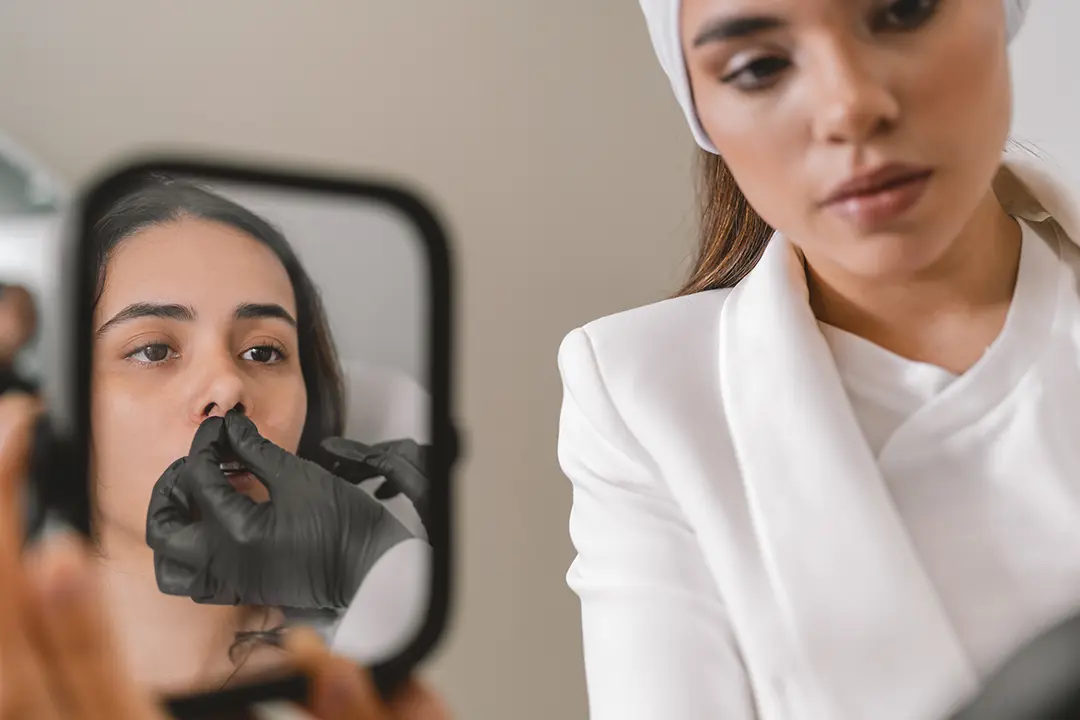
Consultant-led rhinoplasty at Abbey Wood Hospital, Mill Hill, North London.
Common Reasons for Considering Nose Reshaping Surgery
Understanding your motivations helps determine if rhinoplasty is right for you. The most common concerns fall into two categories: cosmetic and functional.
Cosmetic Concerns
Many patients feel unhappy with specific features of their nose. A prominent hump on the bridge often causes self-consciousness. A wide or drooping tip can affect facial harmony. Some people dislike their nose width or nostril shape. Others want to correct asymmetry or adjust overall nose length.
The nose sits centrally on your face. Even small changes can significantly improve facial balance. However, BAPRAS emphasises that surgery alone will not solve emotional or social problems you may attribute to your appearance.
Functional Problems
Breathing difficulties affect daily life and sleep quality. A deviated septum blocks airflow through one or both nostrils. Previous injuries can cause internal structural damage. Some people have naturally narrow nasal passages that restrict breathing.
Septorhinoplasty combines nose reshaping with septum correction. This procedure addresses both appearance and breathing function in a single operation.
Who Makes a Good Candidate for Rhinoplasty?
Not everyone who wants rhinoplasty should have it. Your surgeon will assess several factors during your consultation.
Physical Considerations
Good candidates are in good overall health. You should have no serious medical conditions that increase surgical risks. Non-smokers typically heal better and face fewer complications.
Interestingly, research involving 1,884 patients found that smoking does not strictly rule out rhinoplasty. The revision rate for smokers stood at 3.75% compared to 3.29% for non-smokers. This difference was not statistically significant. However, surgeons still recommend quitting before surgery to optimise healing.
Realistic Expectations
The best candidates understand what rhinoplasty can and cannot achieve. Your surgeon can improve your nose shape and proportion. They cannot create a completely different nose or guarantee perfection. Outcomes depend on your existing nasal structure, skin thickness, and healing response.
Your consultant will explain achievable results during your consultation. Computer imaging helps visualise potential outcomes. Clear communication between you and your surgeon ensures satisfaction with results.
Psychological Readiness
Mental health screening plays a crucial role in rhinoplasty consultations. A 2024 study revealed that 41% of patients seeking cosmetic facial surgery screened positive for Body Dysmorphic Disorder (BDD). This condition causes people to obsess over perceived flaws that others barely notice.
Your surgeon may recommend psychological assessment before proceeding. This protects patients who might not benefit from surgery due to underlying conditions. At Abbey Wood Hospital, patient wellbeing always comes first.
Understanding Open vs Closed Rhinoplasty Techniques
Surgeons use two main approaches for nose reshaping. Your consultant will recommend the best technique based on your specific needs.
Closed Rhinoplasty
In closed rhinoplasty, surgeons make all incisions inside your nostrils. This approach leaves no visible external scars. Swelling typically resolves faster than with open techniques. Most straightforward nose reshaping uses this method.
The NHS notes that closed rhinoplasty works well for many patients but is not always possible or available for complex cases.
Open Rhinoplasty
Open rhinoplasty involves a small incision across the columella. This is the skin between your nostrils. The surgeon lifts the skin to access underlying cartilage and bone directly. This technique provides better visibility for complex changes.
According to BAPRAS, open rhinoplasty allows more accurate tip modifications. However, expect greater swelling and longer recovery times. The small external scar typically fades and becomes barely noticeable.
What Happens During Your Rhinoplasty Consultation
Your journey begins with a thorough consultation with Dr Hakan Tekin, our Medical Director and Aesthetic & Plastic Surgeon. This appointment establishes whether rhinoplasty is right for you.
Medical Assessment
Dr Tekin will review your complete medical history. He will examine your nasal structure inside and out. Photographs document your current appearance for planning purposes. You may need additional imaging to assess internal structures.
Discussion of Goals
Explain exactly what bothers you about your nose. Describe your desired outcome clearly. Bring photos showing noses you find appealing. Your surgeon will explain what changes are realistically achievable for your anatomy.
The General Medical Council (GMC) requires surgeons to ensure you understand the procedure fully. Your consultant should answer all questions honestly. Never feel rushed into making a decision.
Planning Your Procedure
Your surgeon will create a personalised surgical plan. This considers your facial proportions, skin type, and nasal structure. You will receive detailed information about the procedure, risks, and recovery expectations.
The Rhinoplasty Procedure: What to Expect
Understanding the surgical process helps reduce anxiety. Here is what happens on the day of your procedure.
Anaesthesia
Rhinoplasty typically takes place under general anaesthesia. You will sleep throughout the procedure. Some surgeons use local anaesthesia with sedation for minor changes. Your anaesthetist will discuss the best option during your pre-operative assessment.
The Surgery
Operations last between 90 minutes and three hours. Complexity determines duration. Your surgeon reshapes bone and cartilage to achieve planned changes. They may remove tissue, reposition structures, or add grafts from your septum or ear.
Depending on your goals, the surgeon may reduce a hump on the bridge. They might refine or reshape the tip. Breaking and repositioning nasal bones narrows a wide nose. Septum adjustment corrects breathing problems and reduces length.
Immediately After Surgery
You will wake in the recovery room with a splint protecting your nose. Tape holds this in place for about seven days. A small pad under your nose catches any drainage. Most patients spend one or two nights in hospital before going home.
Rhinoplasty Recovery Timeline: Week by Week
Recovery follows a predictable pattern. Understanding this timeline helps you plan appropriately.
Week One
Expect significant swelling and bruising around your eyes. Breathe through your mouth as your nose will feel blocked. Keep your head elevated to reduce swelling. Avoid blowing your nose. Your surgeon removes stitches and the splint after about seven days.
Week Two
Most people return to work after two weeks. Bruising fades but swelling persists. Your nose looks better each day. Continue avoiding strenuous activities. Do not wear glasses that rest on your nose bridge.
Weeks Three to Six
By week three, bruising and redness typically fade. You may resume swimming. At four to six weeks, you can return to strenuous exercise and contact sports. Your nose feels less stiff and more natural.
Six to Twelve Months
Full results take time to appear. Internal swelling resolves gradually over many months. BAPRAS states that 60% of changes appear after three weeks. The remaining 40% evolve over several months or even a year. Final results become apparent between six and twelve months.
Risks and Complications of Nose Reshaping Surgery
Like all surgery, rhinoplasty carries risks. Understanding these helps you make an informed decision.
Common Side Effects
Temporary swelling and bruising occur in every case. Breathing difficulty lasts about a week while swelling subsides. Numbness in the nasal tip is normal and usually resolves within three months. Minor bleeding is common during early recovery.
Potential Complications
The NHS lists several risks that occur less frequently. These include permanent breathing difficulty, damage to the cartilage wall between nostrils, altered sense of smell, and heavy nosebleeds. Infection and excessive bleeding are possible but rare.
Research shows that postoperative infections requiring antibiotics occurred in 1.64% of non-smokers and 3.75% of smokers. Revision surgery rates remain low at around 3-4%.
Dissatisfaction with Results
Some patients feel dissatisfied with their outcome. BAPRAS advises that it is usually best to accept the improvement achieved rather than pursuing further surgery. However, minor adjustments are sometimes reasonable. Discuss revision policies with your surgeon before your initial procedure.
How Much Does Rhinoplasty Cost in the UK?
The NHS confirms that nose reshaping costs between £4,000 and £7,000 in the UK. This covers the surgeon’s fee, anaesthetist, and facility costs. Additional consultations and follow-up care may add to this amount.
The NHS does not fund cosmetic rhinoplasty. You may qualify for NHS treatment if breathing problems significantly affect your quality of life. Your GP can refer you for assessment.
At Abbey Wood Hospital, we provide transparent pricing with no hidden costs. Our consultation fee is £350. We welcome both self-pay and insured patients. Full pricing information is available on our fees page.
Choosing the Right Surgeon for Your Rhinoplasty
Selecting your surgeon is the most important decision you will make. Follow these guidelines from the NHS and professional bodies.
Check Qualifications
Verify your surgeon appears on the GMC specialist register. They should hold a licence to practise. Look for membership in professional bodies like BAAPS or BAPRAS. These organisations maintain standards and provide patient information.
Ask the Right Questions
Enquire about their specific experience with rhinoplasty. Ask how many procedures they perform each year. Request information about their complication rates. Understand their revision policies and what happens if you are dissatisfied.
Choose a Regulated Facility
All clinics and hospitals providing cosmetic surgery must register with the Care Quality Commission (CQC). Check your chosen facility appears on their register. This ensures safety standards are met.
Non-Surgical Rhinoplasty: An Alternative Option
Not ready for surgery? Non-surgical rhinoplasty using dermal fillers offers a temporary alternative. This procedure suits people wanting minor changes without surgery.
Patient satisfaction with non-surgical rhinoplasty exceeds 84-90% in studies. Results typically last 8 to 12 months. The procedure smooths bumps, lifts the tip, and improves symmetry using injectable fillers.
However, non-surgical options cannot reduce nose size or correct significant structural problems. Serious risks exist, including skin necrosis and visual impairment if filler compromises blood vessels. Always choose an experienced practitioner for this treatment.
Why Choose Abbey Wood Hospital for Rhinoplasty
Abbey Wood Hospital provides consultant-led rhinoplasty in a CQC-registered private hospital setting. Our approach prioritises safety, natural results, and patient satisfaction.
Consultant-Led Care
Dr Hakan Tekin performs all rhinoplasty procedures. As Medical Director, he brings extensive experience in aesthetic and plastic surgery. His dual expertise ensures both safety and artistry in every result.
Comprehensive Facilities
Our Day Surgery Unit provides modern, fully equipped surgical facilities. The Imaging Centre supports thorough pre-operative planning. All care happens under one roof, from consultation to follow-up.
Hospital-Based Safety
Unlike high street clinics, we operate within a fully functioning hospital environment. This provides immediate access to emergency support if needed. Our regulated setting meets the highest safety standards for plastic surgery.
Frequently Asked Questions
Is rhinoplasty right for me?
Good candidates are in good overall health and have realistic expectations about what surgery can achieve. Your surgeon will assess your suitability during a consultation, considering your nasal structure, skin type, and goals. Mental health screening ensures you will benefit from the procedure.
How much does rhinoplasty cost in the UK?
According to the NHS, rhinoplasty costs between £4,000 and £7,000 in the UK. At Abbey Wood Hospital, our consultation fee is £350. We provide transparent pricing with no hidden costs.
How long is rhinoplasty recovery?
Most people return to work after two weeks. Bruising fades by week three, and you can resume strenuous exercise after four to six weeks. However, full results take six to twelve months to appear as internal swelling gradually resolves.
What is the difference between open and closed rhinoplasty?
Closed rhinoplasty uses incisions inside the nostrils, leaving no visible external scars. Open rhinoplasty involves a small cut between the nostrils, providing better access for complex changes. Your surgeon will recommend the best approach based on your specific needs.
Can rhinoplasty fix breathing problems?
Yes. Septorhinoplasty combines nose reshaping with septum correction to improve both appearance and breathing function. Many patients seek rhinoplasty for functional reasons, including a deviated septum or narrow nasal passages that restrict airflow.
What are the risks of rhinoplasty?
Common side effects include temporary swelling, bruising, and breathing difficulty during the first week. Less common risks include permanent breathing difficulty, altered sense of smell, heavy nosebleeds, and infection. Revision surgery rates remain low at around 3-4%.
Do I need a GP referral for a private rhinoplasty consultation?
No. At Abbey Wood Hospital, you can book a consultation directly without a GP referral. Simply call us or book online to arrange your appointment with Dr Hakan Tekin.
Book Your Rhinoplasty Consultation
If you are considering rhinoplasty and want to know whether it is right for you, the next step is a consultation with an experienced plastic surgeon. Dr Hakan Tekin will assess your concerns, explain what is achievable, and provide honest advice about whether nose reshaping surgery suits your needs.
At Abbey Wood Hospital, we offer consultant-led rhinoplasty in a safe, CQC-registered private hospital setting. Our approach prioritises natural results, patient safety, and your complete satisfaction.
We serve patients from across North London including Mill Hill, Barnet, Finchley, Edgware, Hendon, Stanmore, and the surrounding areas.
Contact Abbey Wood Hospital at Page Street, Mill Hill, London NW7 2ED. Call 020 8358 7100 or book a consultation online.
This article provides general information about rhinoplasty and does not constitute medical advice. Always consult a qualified surgeon to discuss your individual circumstances.