
A blocked tear duct can turn a simple act like reading or driving into a frustrating struggle. Persistent watering, sticky discharge, and recurrent infections are more than minor inconveniences. They can significantly affect your quality of life and, if left untreated, lead to more serious complications. At Abbey Wood Hospital, our consultant ophthalmic surgeons provide rapid assessment and tailored treatments to restore clear, comfortable vision.
Contents
What Is a Blocked Tear Duct?
A blocked tear duct, medically known as nasolacrimal duct obstruction (NLDO), occurs when the eye’s natural drainage system becomes partially or completely obstructed. This prevents tears from draining normally from the eye into the nose, causing them to build up on the eye’s surface and overflow down the cheeks.
The condition affects people of all ages. In fact, approximately 6% of all newborns are born with blocked tear ducts, though nearly 90% of these infant cases resolve naturally within the first 12 months through gentle massage techniques. In adults, however, acquired obstruction of the lacrimal system has an annual incidence of 37 cases per 100,000 people, and typically requires professional intervention.
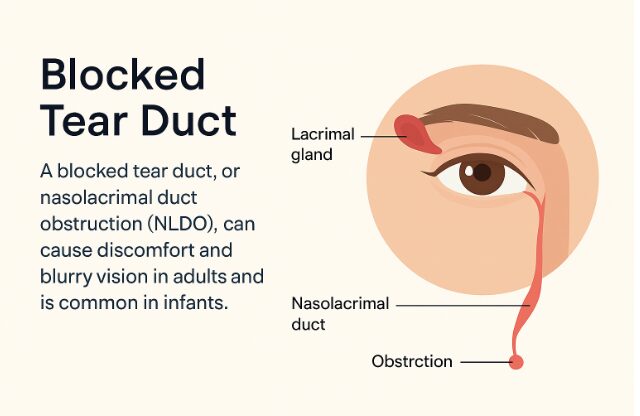
How Your Tear Drainage System Works
Understanding how tears normally drain helps explain why a blocked tear duct causes such troublesome symptoms. Think of your tear drainage system like the guttering on a house. Your lacrimal glands (located above and to the outer side of each eye) act as the source, continuously producing tear fluid that washes over your eye’s surface with every blink.
These tears then drain through two tiny openings called puncta, located in the inner corners of your upper and lower eyelids. From there, tears travel through narrow channels called canaliculi, which lead into the lacrimal sac. This sac sits in a small bony hollow between your eye and nose. Finally, tears flow down the nasolacrimal duct and empty into your nasal cavity, which is why your nose often runs when you cry.
When any part of this drainage pathway becomes blocked, tears cannot escape properly. Just like water backing up when a drainpipe is clogged, tears accumulate and eventually overflow.
Recognising the Symptoms of a Blocked Tear Duct
The symptoms of a blocked tear duct can range from mildly annoying to significantly disruptive, depending on whether the obstruction is partial or complete. If you notice any of the following signs persisting for more than a few days, it may be time to seek professional assessment.
Primary Symptoms
Excessive watering (epiphora) is typically the most noticeable symptom. Tears constantly stream down your cheek, even when you are not crying. This can worsen in cold or windy weather, or after exposure to bright sunlight. You may also notice a sticky discharge or mucus collecting in the corner of your eye, particularly after sleeping. This discharge can cause crusting along the eyelid margins.
Signs of Infection
Because stagnant tears create an ideal environment for bacteria to thrive, a blocked tear duct frequently leads to recurrent eye infections (dacryocystitis). Warning signs include painful swelling and redness in the inner corner of your eye, where the tear sac is located, along with tenderness to touch, fever, and thick yellowish discharge. If left untreated, severe infections can progress to complications such as orbital cellulitis, which requires urgent medical attention.
Impact on Vision and Daily Life
Persistent tearing can cause blurred vision as tears sit on the eye’s surface. Many people find it difficult to read, work on computers, or drive safely. The constant need to wipe away tears can also lead to skin irritation around the eyes and feelings of self-consciousness.
Common Causes of a Blocked Tear Duct in Adults
While blocked tear ducts in babies usually result from an underdeveloped drainage system, adults typically develop obstructions due to other factors. The condition is significantly more common in women over the age of 40, potentially due to narrower duct diameters and hormonal changes.
Age-Related Narrowing
As we age, the puncta and nasolacrimal ducts naturally become narrower. This gradual narrowing is the most common cause of blocked tear ducts in older adults, making it increasingly difficult for tears to drain efficiently.
Infection and Chronic Inflammation
Repeated sinus infections, chronic conjunctivitis, or ongoing inflammation of the eyelids (blepharitis) can cause scarring and swelling that eventually blocks the tear drainage pathways. Bacterial infections, most commonly caused by Staphylococcus, Streptococcus, and Actinomyces species, are frequent culprits.
Trauma and Previous Surgery
Facial injuries, broken noses, or previous eye, eyelid, or sinus surgery can result in scarring that obstructs the tear ducts. Even minor trauma can cause enough tissue damage to disrupt normal drainage.
Other Causes
Though less common, tumours, nasal polyps, or dacryoliths (small stones within the tear duct) can also cause obstruction. Long-term use of certain eye drops, particularly those for glaucoma, may contribute to duct narrowing over time. Previous cancer treatments including chemotherapy and radiation therapy to the face or head are also recognised risk factors.
How a Blocked Tear Duct Is Diagnosed
Accurate diagnosis requires a thorough clinical examination by an ophthalmologist. Your consultant will begin by reviewing your symptoms and medical history before conducting several tests to determine the location and severity of the blockage.
Fluorescein Dye Disappearance Test
A special orange dye is placed on the surface of each eye. In a healthy drainage system, the dye should drain into the nose within approximately five minutes. If dye remains visible on the eye after this time, it suggests an obstruction is present.
Syringing and Probing
Saline solution is gently flushed through the tear drainage system via the puncta. If the system is functioning correctly, you will taste the salty water in your throat. A slender probe may also be inserted to identify the precise location of any blockage.
Imaging Studies
In complex cases, dacryocystography (a contrast X-ray study) or dacryoscintigraphy (a nuclear medicine scan using Technetium-99m) may be used to visualise the tear ducts and pinpoint obstructions that are difficult to identify through clinical examination alone.
Treatment Options for a Blocked Tear Duct
Treatment depends on the underlying cause and severity of your symptoms. While mild cases may respond to conservative measures, most adult blocked tear ducts require surgical intervention to achieve lasting relief.
Conservative Management
For partial blockages or mild symptoms, your consultant may initially recommend warm compresses, gentle massage of the tear sac, and antibiotic eye drops or tablets if infection is present. These measures can provide temporary relief, but rarely resolve the underlying obstruction completely.
Dacryocystorhinostomy (DCR Surgery)
The most effective treatment for an adult blocked tear duct is a surgical procedure called dacryocystorhinostomy (DCR). This operation creates a new drainage pathway directly from the lacrimal sac into the nasal cavity, bypassing the blocked duct entirely.
DCR can be performed using two approaches. External DCR involves a small incision on the side of the nose, providing excellent access to the tear sac with success rates exceeding 90-95%. Endoscopic DCR, performed entirely through the nose using a small telescope, leaves no visible scar and offers comparable results with success rates of approximately 85-90%. In both approaches, a tiny silicone tube (stent) is usually placed to keep the new passage open during healing, typically removed after six to eight weeks.
The procedure is performed under general anaesthetic as a day case or with one overnight stay. Most patients experience some mild bruising and swelling around the eye, which typically resolves within two weeks. Full recovery instructions include sleeping with your head elevated for the first night, avoiding hot drinks for 48 hours, and refraining from blowing your nose for at least one week.
Frequently Asked Questions
Can a blocked tear duct clear itself in adults?
Unlike in babies, adult blocked tear ducts rarely resolve spontaneously. While conservative measures may manage symptoms temporarily, most adults require surgical treatment to achieve permanent improvement.
How long does recovery from DCR surgery take?
Most people return to normal activities within one to two weeks. Bruising and swelling typically fade within a fortnight, and any external scarring becomes virtually invisible after six months. The internal stent is removed in clinic after six to eight weeks.
Is DCR surgery painful?
The procedure is performed under general anaesthetic, so you will feel nothing during surgery. Mild discomfort, tenderness, and a sensation of nasal congestion are common afterwards but are well controlled with standard painkillers such as paracetamol.
What happens if a blocked tear duct is left untreated?
Without treatment, a blocked tear duct can lead to chronic infections, dacryocystitis, and in rare cases, serious complications including orbital cellulitis or abscess formation. Seeking timely assessment prevents these issues and restores quality of life.
Are certain people more at risk?
Yes. The condition is more common in women, particularly those over 40 years of age. People with chronic sinus problems, previous facial trauma, or long-term use of certain eye medications are also at increased risk.
Meet Your Consultant: Ophthalmic & Oculoplastic Authority
Specialised treatment for tear duct obstruction requires the combined expertise of general ophthalmology and oculoplastic surgery. Our consultants bring both the diagnostic precision and surgical skill needed for a lasting solution.
Consultant Ophthalmic and Oculoplastic Surgeon with over 4,000 cataract operations performed. He has particular expertise in eyelid and lacrimal (tear duct) surgery.
Mr Ismail’s extensive experience as an Oculoplastic Surgeon makes him an authoritative expert in the delicate procedures required to safely and effectively reconstruct your tear drainage system.

Consultant Ophthalmologist specialising in Oculoplastic and Cataract surgery. She has wide-ranging experience from international units and a focus on complex reconstruction and trauma.
Dr Sobti’s extensive training in oculoplastics and her collaborative work alongside other specialists ensure a thorough, expert assessment and state-of-the-art treatment for all eye-related obstructions.
Getting Professional Help at Abbey Wood Hospital
If persistent watering, sticky discharge, or recurrent infections are affecting your daily life, do not wait for symptoms to worsen. Our consultant ophthalmic and oculoplastic surgeons at Abbey Wood Hospital’s Ophthalmology department offer rapid assessment and access to the most effective treatments, including both external and endoscopic DCR surgery.
Call our dedicated appointments team on 020 8358 7100 or book an appointment online to arrange your private consultation. With expert care and proven surgical techniques, clear, comfortable vision is within reach.
This article is intended for general information only and does not constitute medical advice. Always consult a qualified healthcare professional for diagnosis and treatment tailored to your individual needs.